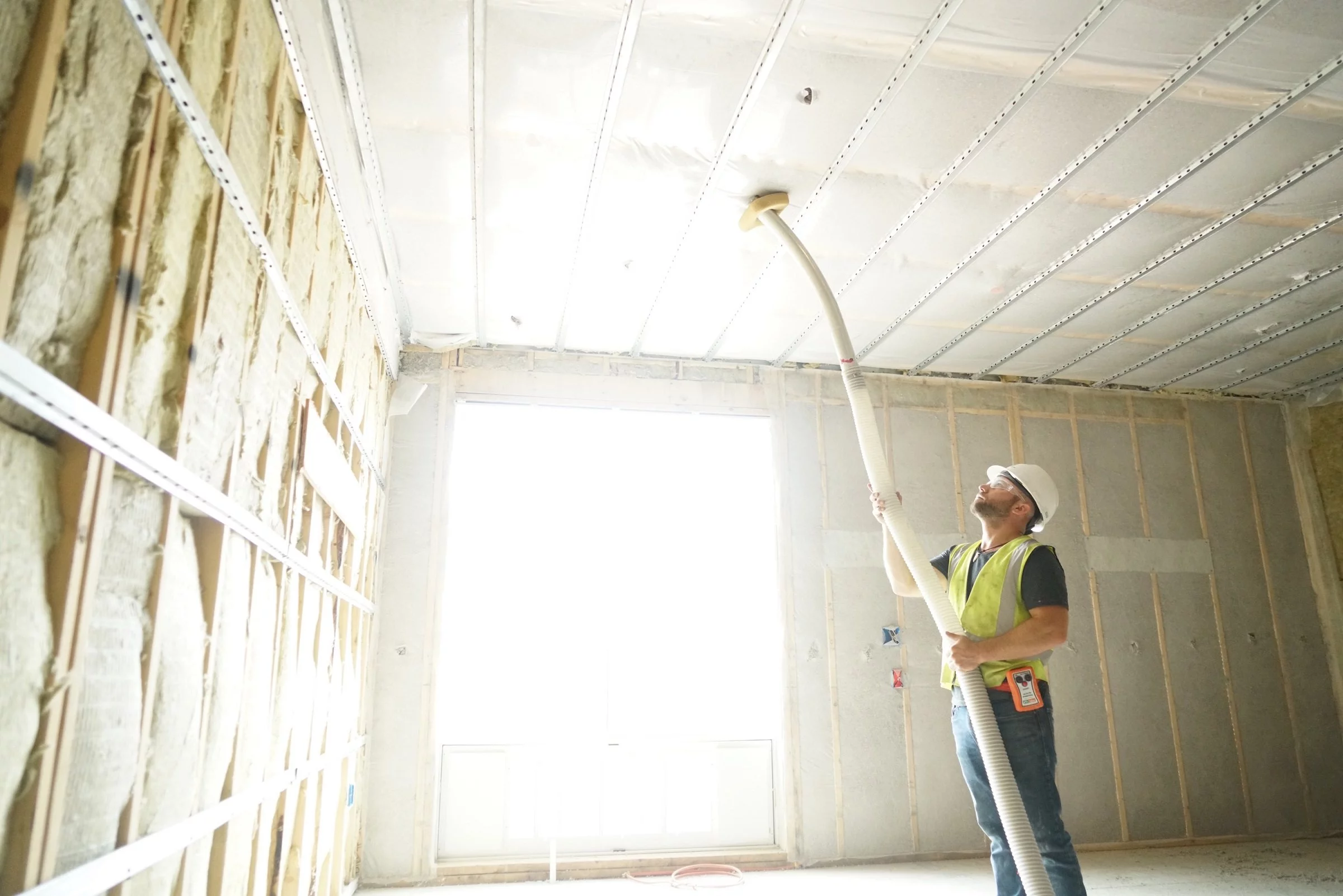
Lower Energy Costs
Insulation helps regulate indoor temperatures by reducing heat loss in winter and heat gain in summer. This significantly reduces the load on HVAC systems, leading to lower utility bills and reduced operating costs — year after year.
Improved Comfort for Occupants
Whether it’s employees in an office or customers in a retail space, insulation creates a more consistent and comfortable environment. No more hot or cold zones — just stable, pleasant indoor temperatures.
Noise Control
Insulation acts as a sound barrier, reducing noise transmission between rooms and floors. This is especially important in multi-tenant buildings, offices, schools, or hospitals, where peace and quiet matter.
Moisture & Mold Prevention
Certain types of insulation also help control moisture, which can prevent mold growth, corrosion, and structural damage. This protects your building’s integrity and air quality over the long term.
Increased Property Value
Energy-efficient, well-insulated buildings are more attractive to buyers, tenants, and investors. Quality insulation can increase your property’s resale value and appeal in competitive markets.
Environmental Responsibility
Insulation reduces energy consumption, which in turn lowers your building’s carbon footprint. This supports sustainability goals and can help with certifications like LEED or ENERGY STAR.